
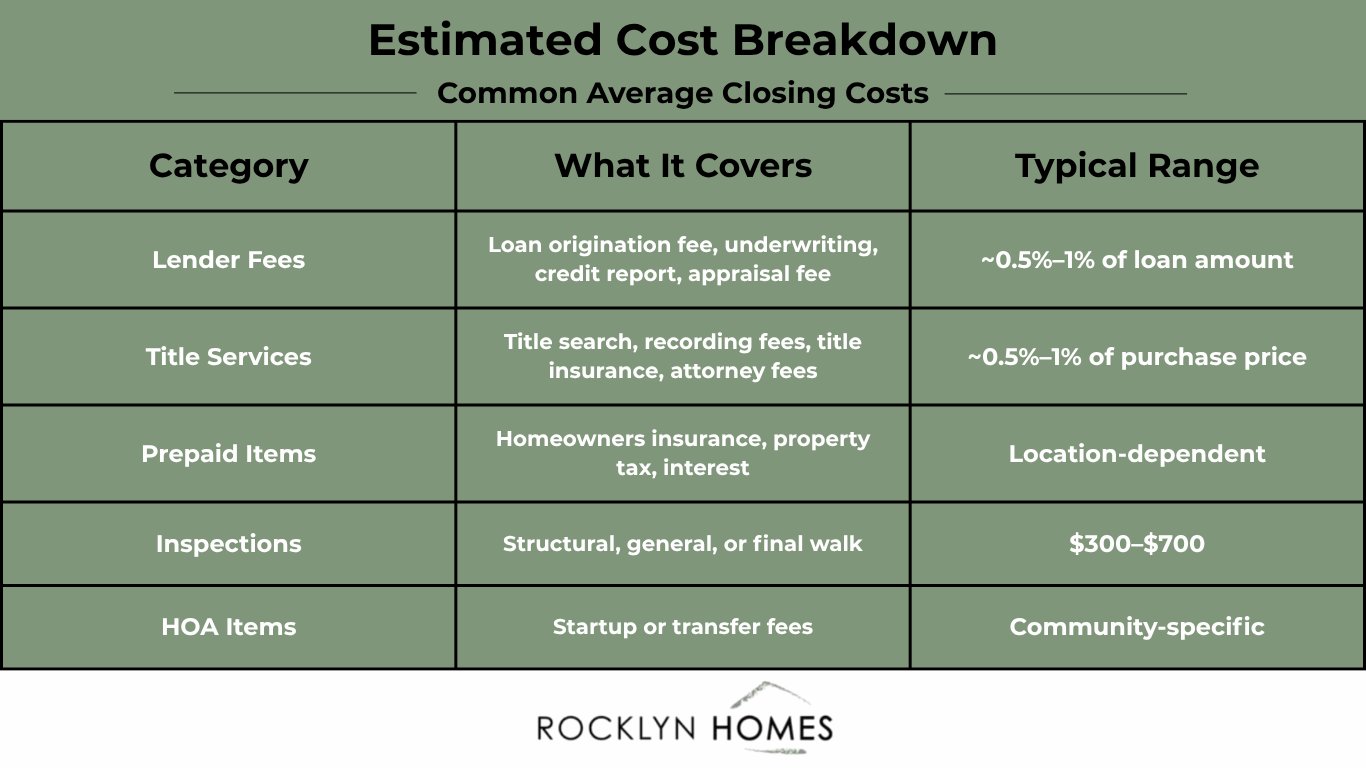
“I paid $6,000 in closing costs. I have no idea what I paid for.”
That’s what my client Rachel told me after her first refinance. She wasn’t alone. Most people sign the closing disclosure without understanding half the line items. I don’t blame them. The document is three pages of dense legalese designed to confuse.
Let me decode every dollar. I’ll use a real example from a client named Steve—a 45-year-old teacher who refinanced a $260,000 loan in June 2026. His closing costs totaled $4,850. I’ll show you where each chunk went and which fees you can fight.
The Big Picture: What Are Closing Costs, Exactly?
Closing costs are all the fees you pay to originate your new loan. They typically run 2% to 5% of your loan amount. On a $300,000 refi, that’s $6,000 to $15,000. Yes, it can be that high.
But here’s the brutal truth: many of these fees are negotiable. Some are outright junk. Others are third‑party costs that the lender doesn’t control. Knowing the difference saved Steve about $1,200.
Let’s walk through his closing disclosure page by page.
Section A: Origination Charges (The Bank’s Cut)
This is where the lender makes money. Steve’s origination charges totaled $1,800. That included:
- Origination fee: $1,200 (a flat fee for processing the loan)
- Underwriting fee: $450 (the cost for someone to review his file)
- Processing fee: $150 (paperwork handling)
Here’s what Steve didn’t know: the origination fee is negotiable. I told him to call the lender and ask, “Can you waive or reduce the origination fee?” He did. The lender dropped it to $800. That saved him $400.
The underwriting and processing fees are sometimes negotiable too—but less often. Still, it never hurts to ask.
Pro tip: If a lender refuses to budge, ask for lender credits. They can offset some of your closing costs in exchange for a slightly higher interest rate. On a $260,000 loan, a 0.125% rate increase might give you $800 in credits. If you plan to stay in the home for only a few years, that’s a great trade‑off.
Section B: Services You Can Shop For
These are third‑party services that you don’t have to buy from the lender. Steve’s disclosure showed:
- Appraisal fee: $550
- Credit report fee: $45
- Flood certification: $12
- Title search: $300
- Title insurance lender’s policy: $850
The appraisal, credit report, and flood cert are usually fixed. But the title services? You can shop around. Steve called two local title companies. One offered the same title search and insurance for $950 total—$200 less than the lender’s preferred vendor. He switched. Another $200 saved.
I could be wrong, but I think most borrowers don’t realize they can choose their own title company. You can. Always ask for a few quotes.
Section C: Services You Cannot Shop For
These are fees charged by the lender’s chosen providers. Steve had:
- Tax service fee: $85
- Recording fee: $120
- Courier fee: $30
Not much you can do here. They’re small. Don’t waste energy fighting them.
Section D: Taxes and Government Fees
Steve’s state and local taxes totaled $450. That’s not negotiable—it’s the law. But you can check that the amounts are correct. Steve’s county recording fee was $120, which matched the county website. All good.
Section E: Prepaids (Money You’d Pay Anyway)
This section confuses people. Prepaids aren’t really costs—they’re money you put into an escrow account for future expenses. Steve had:
- Prepaid interest: $320 (covers the interest from closing day to the end of the month)
- Homeowner’s insurance premium: $1,100 (six months of premiums for the new escrow account)
- Property tax escrow: $1,200 (three months of taxes)
These aren’t fees. They’re just moving money from your pocket to an escrow account. You’d pay them anyway. The only catch is the timing—you have to fund the account at closing. Some lenders over‑escrow. Steve’s lender wanted $1,500 for taxes. He asked for the actual tax bill and proved that three months would be $1,200. They adjusted it. Another $300 saved.
Always check the escrow estimates. Lenders sometimes pad them to be safe. You can ask them to use the actual amounts.
Section F: Title Insurance Owner’s Policy (Optional)
This is title insurance that protects you, not the lender. It’s optional. Steve’s lender quoted $650. He declined. He’d already owned the home for eight years and felt comfortable with the title history. That’s a personal choice. Some people buy it; some don’t. I can’t tell you which is right. But know that you can decline.
The Final Tally: Steve’s $4,850 Closing Cost Breakdown
After negotiating and shopping, Steve’s total came to:
- Origination charges: $800 (down from $1,200)
- Services you can shop for: $1,100 (down from $1,300)
- Services you can’t shop for: $235
- Taxes and gov fees: $450
- Prepaids (real costs only? Actually prepaids aren’t fees, but they’re cash out of pocket): $1,620 – but he’d pay these anyway over time
- Owner’s title insurance: $0 (declined)
Total out‑of‑pocket cash needed at closing (excluding prepaids): $2,585. That’s the real “cost” of refinancing. The prepaids are just moving money around.
Steve’s break‑even point was 19 months based on his monthly savings of $136. He plans to stay for seven years. Good decision.
Which Fees Are Junk?
Here’s my personal junk‑fee hit list:
- Application fee (if it’s separate from origination) – ask to waive
- Processing fee – often bundled; push back
- Underwriting fee – sometimes negotiable
- Courier fee – who uses couriers anymore? Ask to waive
- Wire transfer fee – usually $25‑$50; ask to waive
- Flood certification – small, but ask
I’ve had clients get $300‑$500 in junk fees removed just by asking. The lender wants your business. They’ll sometimes waive small fees to keep you happy.
The No‑Closing‑Cost Refinance: Is It Real?
Yes, but it’s not free. The lender pays your closing costs in exchange for a higher interest rate—usually 0.25% to 0.5% higher. On a $300,000 loan, that’s about $50‑$100 more per month. If you plan to move within 2‑3 years, it can make sense. If you plan to stay longer, you’re better off paying costs upfront to get the lower rate.
Steve considered a no‑cost refi at 6.7% instead of his 6.4% paid option. The no‑cost would have saved him $4,850 upfront but cost him $60 more per month. Break‑even: 81 months. He’s staying 84 months. Almost a wash. He chose the paid option for peace of mind.
I will keep posting updates on this. Check back soon.
P.S. After closing, Steve’s loan officer sent him a fruit basket. He told me, “I’d rather have kept the $400 origination fee.” True story.
This article is for informational purposes. Closing costs vary by lender and location. Always review your closing disclosure line by line.
Michael Harrington